

It all started with a coffee spill. One early morning in 2025, a legal expert and a physics PhD bumped into each other on a video call—each convinced their career paths could never overlap. Fast forward: both are thriving in the surprising world of remote AI roles. If you think the future of remote work belongs solely to coders, you might be missing out on some electrifying (and surprisingly well-paid) trends. Let’s unravel how skills from law, management, science, and even photography are now the hottest tickets in an AI-infused job market. Warning: there might be a few left turns ahead.
1. Remote AI Job Roles 2025: Why the Usual Suspects Don’t Always Apply
When most people picture remote AI job roles in 2025, they imagine software engineers and data scientists hunched over code. But the latest job listings reveal a much broader landscape—one where legal experts, management consultants, open source developers, creative professionals, and even first-line supervisors are not only present, but essential.
Legal and Consulting Experts: The New Core of Remote AI Teams
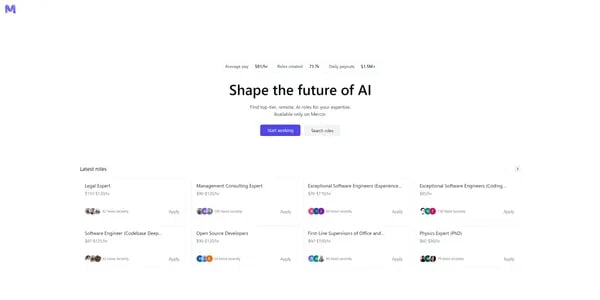
AI is no longer just about algorithms; it’s about compliance, ethics, and business strategy. Legal expert job openings in 2025 are commanding rates of $110–$130 per hour, reflecting their critical role in navigating complex regulatory environments and intellectual property challenges. Management consulting experts, earning $90–$120 per hour, are shaping how AI projects align with business goals and industry standards. Their expertise ensures that AI solutions are not just technically sound, but also legally compliant and strategically viable.
“Tech teams today are borderless, and so are the skills they need.” – Taylor Morgan, Remote Work Strategist
The Rise of Open Source Developers and Creative Roles
Open source is at the heart of AI innovation. Open source developer job listings for remote roles are offering $90–$120 per hour, highlighting the demand for professionals who can collaborate across distributed teams and contribute to widely-used frameworks. These developers bring agility and transparency to AI projects, often working alongside traditional engineers.
Surprisingly, creative roles are also shaping the future of AI. Creative photography experts are being hired at $60 per hour to curate, annotate, and generate high-quality visual data for AI training. Their work ensures that machine learning models are exposed to diverse, realistic datasets—crucial for applications in computer vision, media, and beyond.
First-Line Supervisors: Leadership in Virtual Teams
Leadership is being redefined in remote AI environments. First-line supervisors of office and administrative support workers are now earning $60–$100 per hour, a figure that rivals many technical roles. These professionals are responsible for coordinating distributed teams, maintaining workflow, and ensuring project milestones are met. Their ability to manage people and processes remotely is proving invaluable as AI projects scale globally.
AI Job Listings: Broader Skillsets, Premium Pay
A review of top-tier remote jobs in AI 2025 shows that the field is drawing from a diverse talent pool. Beyond the usual suspects, there is strong demand for:
Physics experts (PhD): $60–$80/hr
Mathematics experts (Master’s/PhD): $60–$80/hr
Exceptional software engineers (agent experience): $70–$110/hr
This shift reflects a new reality: AI teams need more than just technical chops. They require legal insight, business acumen, creative thinking, and strong leadership. As remote work continues to expand, so too does the definition of who shapes the future of AI.
2. The Salary Plot Twist: AI Roles Salary Comparison 2025
When it comes to AI roles salary comparison 2025, the landscape is full of surprises. While software engineers have long been considered the backbone of artificial intelligence, recent job market data reveals that non-technical experts are commanding salaries that rival, and sometimes surpass, those of their technical counterparts. The rise of remote work has further equalized earning potential, making it possible for professionals from diverse backgrounds to shape the future of AI—and get paid handsomely for it.
Who Makes the Most: Legal Experts, Engineers, or Physicists?
According to the latest job listings, Legal Experts specializing in AI are among the highest earners, with hourly rates ranging from $110 to $130. This outpaces even the most advanced software engineer codebase deep reasoning salary, which falls between $85 and $125 per hour. Management Consulting Experts are not far behind, earning $90 to $120 per hour. Meanwhile, Exceptional Software Engineers with agent experience are seeing offers starting at $85 per hour and up, reflecting the ongoing demand for specialized technical skills.
Role | Hourly Rate (USD) |
|---|---|
Legal Expert | $110–$130 |
Software Engineer (Deep Reasoning) | $85–$125 |
Management Consulting Expert | $90–$120 |
Exceptional Software Engineer (Agent Experience) | $85+ |
Physics Expert (PhD) | $60–$80 |
Mathematics Expert (Master’s/PhD) | $60–$80 |
Creative Photography Expert | $60 |
Why Salary Isn’t Just About Coding
In 2025, AI talent salary is no longer dictated solely by coding prowess. Legal, management, and creative roles are now essential to the AI ecosystem, and their compensation reflects that importance. Legal experts are critical for navigating complex regulatory landscapes, while management consultants drive strategic adoption of AI solutions. Even creative professionals, such as photography experts, are finding their skills in demand for training and refining AI models.
“AI isn’t just about algorithms. It’s about the whole orchestra behind the code.” — Jamie Lin, Talent Acquisition Lead
Unexpected Hotspots: Creative and Mathematical Minds
Perhaps the most unexpected trend in the remote AI engineer job market is the rise of roles like Creative Photography Expert ($60/hr) and Mathematics Expert ($60–$80/hr). These professionals are increasingly valued for their ability to enhance AI’s creative and analytical capabilities. The demand for diverse skill sets is driving upwards pressure on compensation, ensuring that AI’s future is shaped by more than just software engineers.
Legal and management roles now rival tech specialist earnings.
Creative and mathematical experts are in high demand for AI development.
Remote job models have leveled the playing field for diverse professionals.
3. Management Consulting, Creativity, and Unlikely AI Heroes
When most people picture the future of remote AI work, they imagine teams of software engineers and data scientists. But in 2025, the landscape is far more diverse. Management consulting expert positions 2025 are among the most in-demand roles, with rates ranging from $90 to $120 per hour. These professionals do more than analyze spreadsheets—they are the bridge between cutting-edge technology and real-world business needs.
Management consultants are uniquely positioned to translate complex AI solutions into actionable strategies for organizations. Their interdisciplinary skills—combining business acumen, communication, and technical understanding—are now essential to modern AI project success. As Priya Chandrasekar, an AI Project Manager, puts it:
“The best AI teams look like a potluck dinner—you need a bit of everything.”
This “potluck” approach is evident in the surprising rise of creative photography expert roles within AI teams. Earning $60 per hour, creative photographers are being hired to help train visual AI models, curate datasets, and even guide AI-generated imagery. Their artistic eye ensures that AI outputs are not just technically accurate, but also visually compelling and relevant for end users. This trend highlights a key insight: AI needs more than math wizards to thrive.
The demand for mathematics expert job opportunities 2025 also remains strong, with rates between $60 and $80 per hour. However, the value these experts bring goes beyond advanced equations. Consider the story of a mathematics PhD who was recently hired for a major AI project—not for their ability to solve complex formulas, but for their clarity in problem-solving and ability to break down abstract challenges into manageable steps. Their analytical mindset helped the team navigate ambiguity and reach practical solutions.
These examples underscore a broader hiring trend: exceptional software engineers hiring trends show that technical prowess alone is no longer enough. AI teams are actively seeking out professionals from non-obvious backgrounds—consultants, creatives, mathematicians, and even first-line supervisors—to build diverse, innovative teams. According to recent job board data, over 100 management consulting experts and more than 110 creative photography experts have been hired for remote AI roles in the past quarter alone.
Management Consulting Expert: $90–$120/hr
Creative Photography Expert: $60/hr
Mathematics Expert: $60–$80/hr
The message is clear: the unexpected faces shaping remote AI roles in 2025 are those who bring a blend of creativity, analytical rigor, and the ability to connect technology with human needs. In this new era, team diversity is not just a buzzword—it’s a proven driver of innovation and project success.
4. Open Source, Supervisors, and the Remote AI Ecosystem
The landscape of remote AI roles in 2025 is being shaped by a surprising mix of talent, as highlighted by recent mercor remote job listings 2025. No longer limited to traditional software engineers, the remote AI ecosystem now prizes open source contributors, first-line supervisors, and professionals with hybrid skills. This shift is reflected in both the diversity of roles and the premium compensation offered across the board.
Open Source Isn’t Just for Coders Anymore
Open source developer job listings have seen a surge in demand, with rates ranging from $90-$120/hr. However, the definition of “open source contributor” has expanded. Today, teams value not only coders, but also documentation specialists, community managers, and even creative professionals who help shape project narratives and user experience. As Samira Patel, an Open Source Team Lead, notes:
“In open-source AI, I once managed a global team where our best contributor wasn’t even a developer.”
This quote underscores the growing importance of non-technical and hybrid skills in open source AI projects. Contributors who can bridge communication gaps, coordinate across time zones, or bring fresh perspectives from design and user research are now essential to project success.
First-Line Supervisors: Managing Remote AI Teams at Premium Rates
Another unexpected face in the remote AI ecosystem is the first-line supervisor. Traditionally seen in office or administrative settings, these professionals are now critical in managing distributed AI teams. According to recent listings, first-line supervisors’ salary can reach up to $100/hr, reflecting both the complexity and value of their role.
Their responsibilities go beyond basic oversight. First-line supervisors coordinate project timelines, facilitate communication between technical and non-technical team members, and ensure that remote workflows remain efficient. Their hybrid expertise in management and technology is increasingly prized by remote hiring platforms, as they help maintain productivity and morale in globally distributed teams.
The Rise of Remote Roles Across Unexpected Verticals
The remote AI ecosystem is no longer limited to software engineering. Mercor remote job listings 2025 showcase a broad talent pool, including legal experts, management consultants, creative photography professionals, and even physics and mathematics experts. This diversity is a testament to the evolving needs of AI-driven organizations, which now require a blend of technical, creative, and managerial skills to succeed.
Open Source Developers: $90-$120/hr
First-Line Supervisors: $60-$100/hr
Creative and Consulting Roles: $60-$130/hr
As remote AI teams become more interdisciplinary, the ecosystem continues to reward those who can collaborate, adapt, and lead across traditional boundaries. The unexpected faces shaping these roles are redefining what it means to contribute to the future of artificial intelligence.
5. Wild Cards: Physics, Mathematics, and the Forgotten AI Pioneers
In 2025, the AI job market is being quietly reshaped by a new class of specialists—those with deep roots in physics and mathematics. Once confined to university labs or research institutions, these experts are now thriving in remote, cross-disciplinary AI teams. The demand for physics expert job market 2025 and mathematics expert job opportunities 2025 has never been higher, with salaries ranging from $60 to $80 per hour for both fields. This shift highlights a broader trend: the AI revolution is no longer just about coding or data science. Instead, it’s about harnessing the power of interdisciplinary knowledge to solve complex, real-world problems.
Consider the modern AI content team. It’s not unusual to see a physics PhD collaborating with a legal expert, a management consultant, and even a creative photographer. Together, they tackle challenges like data privacy, algorithmic fairness, and the ethical use of AI-generated images. These teams rely on the unique perspectives and rigorous analytical skills that physicists and mathematicians bring to the table. As Dr. Alex Chen, AI Research Scientist, puts it:
“Physics and math trained me to ask ‘why’—and that’s the engine of every great AI breakthrough.”
The AI job market in 2025 is defined by its openness to non-traditional figures. Physicists and mathematicians are no longer the “forgotten AI pioneers”; they are now the linchpins of innovation. Their ability to model uncertainty, optimize complex systems, and think abstractly is invaluable in fields like machine learning, natural language processing, and robotics. These skills are especially important in remote roles, where cross-industry collaboration is the norm and flexibility is a given.
Remote work has further democratized access to these opportunities. Science PhDs and Master’s graduates can now contribute to leading AI projects from anywhere in the world, often working across industries—from healthcare and finance to autonomous vehicles and creative arts. The AI specialist salary for these roles is competitive, reflecting the high demand for niche expertise that can drive breakthroughs and maintain a company’s competitive edge.
What makes these “wild cards” so essential is their ability to ask the fundamental questions. In a landscape where AI projects often hinge on overlooked details, the curiosity and rigor of a physicist or mathematician can mean the difference between incremental progress and transformative innovation. Their presence in virtual offices signals a new era, where the boundaries between science, technology, and creativity are increasingly blurred.
As the AI job market continues to evolve, it’s clear that the unexpected faces—those with backgrounds in physics, mathematics, and other niche sciences—are shaping the future of remote AI roles. Their expertise is not just relevant; it’s essential for the next wave of AI breakthroughs.